Why Bulk Jewelry Production Takes 45 Days
Forty-five days is not a marketing number and it is not a stall. It is the sum of steps that cannot be shortened without changing what the product is. If you are comparing us against suppliers quoting three weeks, the honest answer is that they are quoting a different thing — most likely stock or a much simpler build.
This page breaks the clock down. If you are planning a launch, the useful part is the last section, on what shortens and what does not.
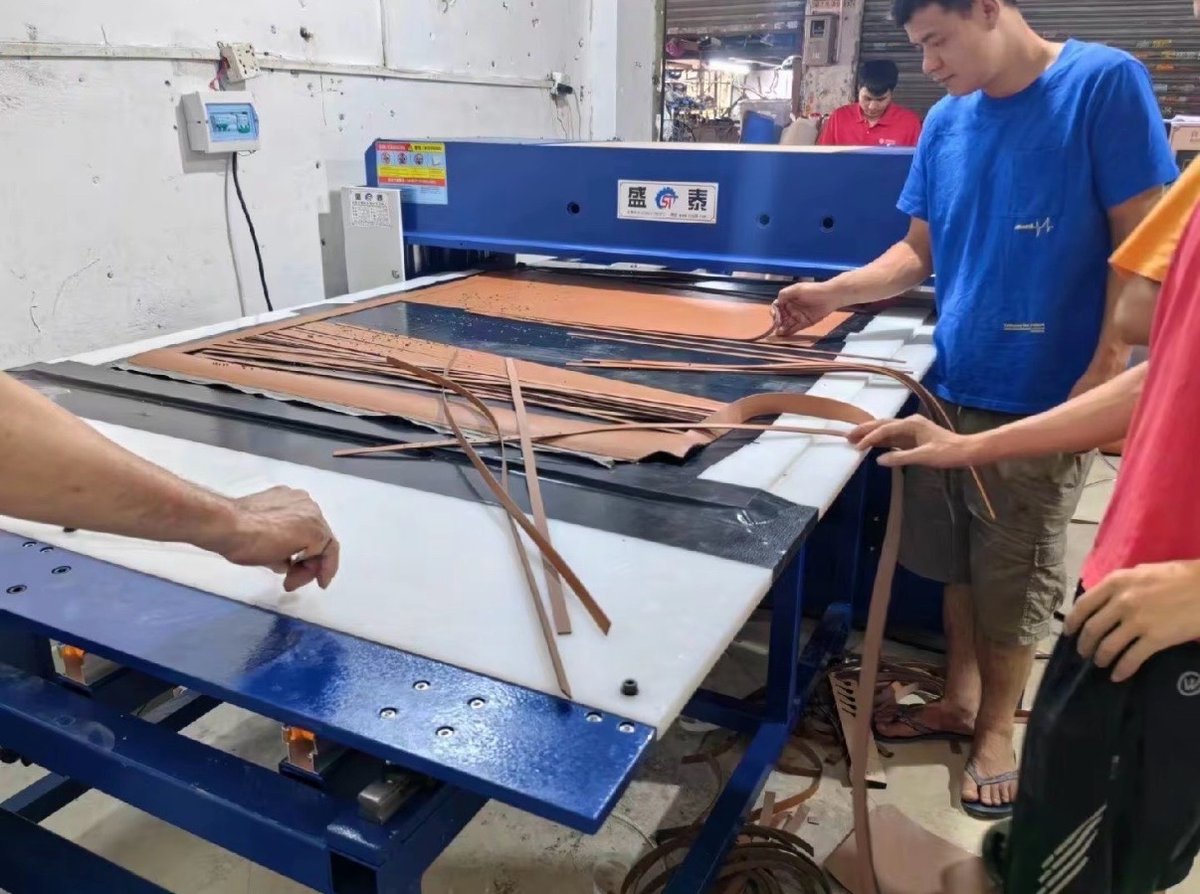
Where the 45 days actually go
The figure covers production only. It is not freight, not customs, not the hull of a holiday. Those sit on top, and they are the buyer's to account for — see shipping and customs.
Roughly, for a custom metal jewelry or jewelry box order:
- Tooling and dies — a cutting die for a custom box shape, or a mold for a new pendant. Made once, used for the life of the design.
- Material procurement — leather, velvet, board, steel coil, PVD targets. Lead time moves with the market, and a specific colour is not always on the shelf.
- Production — forming, casting, stamping, sewing, assembly. This is the part people picture, and it is not the longest part.
- Plating and curing — PVD coating needs time to reach its specified thickness and to cure. Rushing this is how you get a bracelet that changes colour in month two.
- Inspection and rework — full inspection before shipment. Rework is included in the clock because it happens inside production, not after.
- Packing and export — retail packing, carton, documentation, and the export clearance that ends the production window.
Read that list again. Only one line is "making the thing". Everything else is setup, chemistry, or checking.
Why the comparison with faster suppliers is not fair
Suppliers in the US and Europe who quote seven to twelve days are usually selling existing inventory, not making your design. That is a genuinely good service, with a genuinely different model:
- Their speed comes from stock already paid for. Somebody, at some point, bought those units.
- Their range is limited to whatever is in the warehouse. Customisation is a subset of the catalog.
- Their unit price carries holding costs — warehousing, insurance, obsolescence.
We are not competing on that axis, and we would rather say so than pretend. Our lead time applies to your design, made once. If what you need is a catalogue item shipped this week, that is a real and legitimate purchase, and you should buy it. If what you need is your own product, the clock starts at tooling and does not skip.
The useful question is not "who is faster" but "what am I buying?" — stock, or a product that exists only because you asked for it.
What you can do to shorten your own timeline
Some of this is on our side. Most of it is on yours, and it is free:
- Brief properly the first time. Missing measurements, an unclear logo placement, or an untested plating colour are the top three causes of a sampling round that goes sideways. A complete brief costs you a day and can save two weeks.
- Approve samples on the day they arrive. If approval waits a week for a colleague's availability, that week is gone and it is not recoverable.
- Confirm compliance early. If your market needs nickel-release testing or other documentation, say it in the RFQ. Testing arranged after production can stop a shipment.
- Plan around sampling, not around production. Sampling approval is the milestone that locks the whole schedule.
- Do not ask for compression mid-run. A promise made in week two to save week one usually costs you the batch.
When 45 days should worry you
A long lead time is only a problem if you did not plan for it. It becomes a real failure in a specific set of circumstances:
- You launched your marketing before the stock existed. The demand was real; the timeline was not.
- You approved samples late. The factory held capacity for you and you used it for something else.
- The design was not locked. Every change after tooling starts is a new clock.
- Nobody budgeted for compliance. Documentation is not a post-production afterthought.
None of those are caused by the factory. All of them are solvable in the planning stage.
Bead strands are a different clock
Six of our jewelry styles are bead strands strung on elastic cord rather than cast or plated metal. They are assembled, not produced, so bulk production runs closer to 25 days for that line. If bead strands are most of your assortment, that clock is the one that matters to you — see the bead strand styles in the catalog.
Is the 45-day figure fixed?
It is our standard for the metal jewelry and jewelry box lines. It varies with design complexity, plating spec, and how much of the material is already on the shelf. We would rather quote your project than defend a single number.
What shortens a run?
A complete brief, fast sample approval, locked designs, and compliance requested in the RFQ. Those are the four levers that are actually under your control.
What lengthens it?
New tooling, a custom colour not already specified, a complex plating stack, and any change made after production starts.
Can you hold stock for me?
Not as a standing service. We are a manufacturer, not a warehouse, and holding your units means paying to store someone else's capital.
Does sampling count against the 45 days?
Sampling runs in parallel to its own roughly fifteen-day window, and the bulk clock starts once you approve the sample. Why sampling takes about fifteen days walks through that window in detail.
Next step
Tell us your design, plating, volume, and destination market. We will give you a schedule with the milestones named, so you can plan the launch around the real dates rather than a number. Contact FSC CRAFT.
Related: Why jewelry sampling takes about 15 days · What happens when you order a sample · How bulk jewelry production is quoted
← Wholesale Shipping: Freight, Customs and the Costs Buyers Miss
What Is The Safest Way To Travel With Jewelry? →
Frequently Asked Questions
What makes up the 45 days?
Six steps that cannot overlap: tool preparation, production, finishing and plating, assembly, inspection and packing. Each is real work, and removing one of them changes the product rather than merely shortening the calendar.
Can the figure be compressed?
Only at the front. A design that is still moving is the most common cause of a late bulk order, because the sample goes back twice. Freezing the design before the order is placed buys more time than pressure applied later.
Why do some suppliers quote a shorter time?
Because they mean something different. A 25-day figure for a piece we call 45 usually covers metal production only, leaving plating, packing and inspection outside it. Ask which steps sit inside the number.
Part of the wholesale page: Where those 45 days go.
What this means for your order
If you are still deciding, one thing decides this for you: the 45 days are accounted for by tooling, sampling, plating and packing in that order, and none of the steps compress in parallel. Everything else on a quote page is presentation.
Where this falls short the date is fixed and hard, custom bulk production is not the right tool - the answer then is a stock programme or a smaller first run.
What to send us your required bulk date and quantity, and we will tell you honestly what can be done against it.
Get a quote
Send the drawing, target material and volume. We reply within one business day with the MOQ, the sampling and bulk lead times for your piece, and the step each one belongs to.