MOQ Explained for Custom Jewelry Boxes
Price comes first in any quote for customjewelry boxes and organizers. Right behind it comes the MOQ, the minimum order quantity. First-time buyers tend to read that number as an arbitrary wall the factory put there to be difficult. It's not. It is how a factory recovers its fixed costs, and once you know which costs drive the number, you can negotiate harder, plan inventory better and sometimes cut the minimum dramatically.
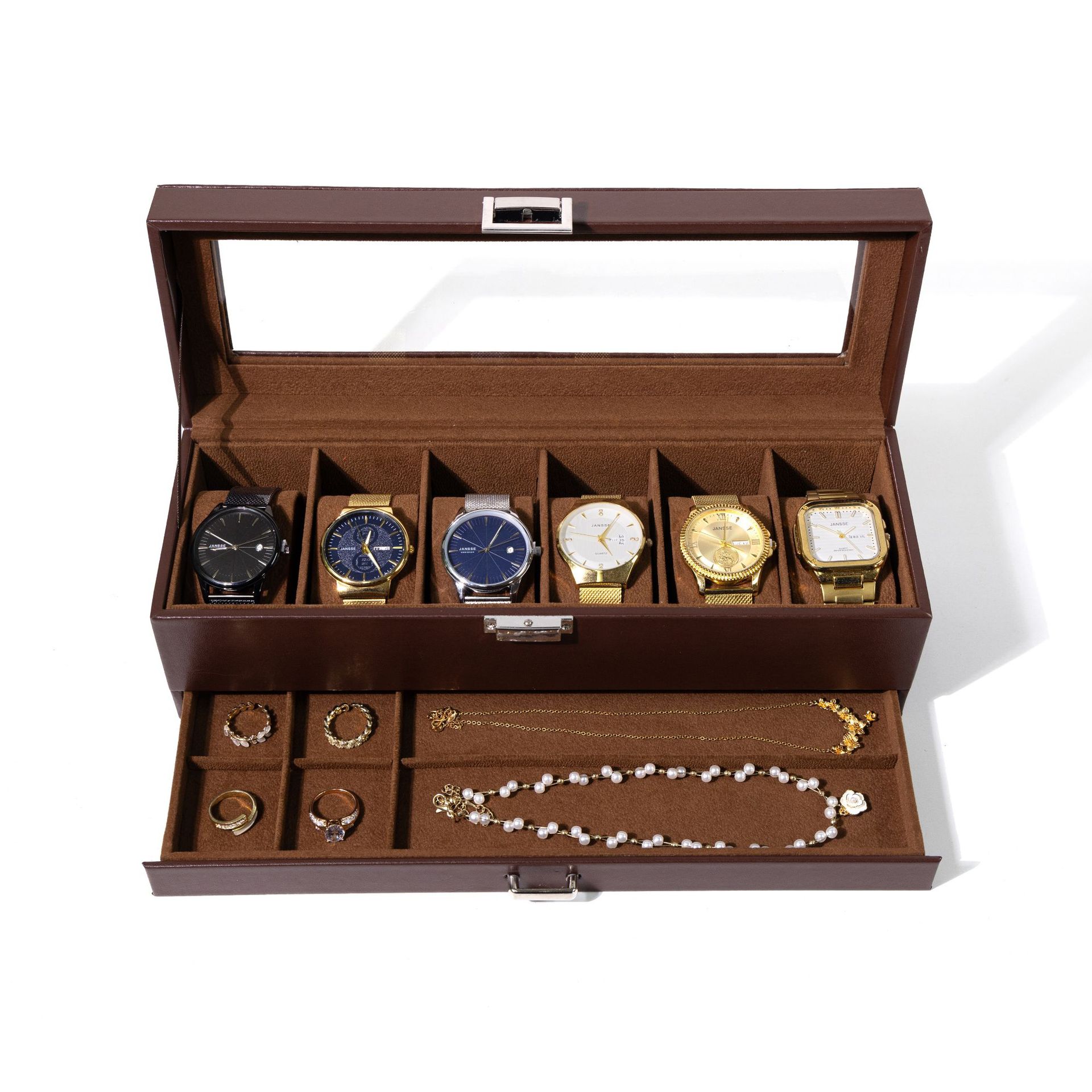
Why Factories Set Minimum Order Quantities
Each production run carries fixed costs that exist no matter how many units you order: material setup, machine calibration, mold changes, printing plate setup, labor allocation and quality inspection. If the factory makes 50 boxes, those costs get spread across 50 units. If it makes 2,000, the same costs are spread much thinner. The MOQ is simply the quantity at which the unit price stays sane and the production line runs efficiently.
- Material costs: leather, wood, velvet and foam are bought in bulk rolls, sheets and blanks
- Tooling: molds, dies, printing plates, hot-stamping plates
- Setup time: recalibrating machines and training staff for a specific order
- Inspection: QC sampling needs a minimum batch before the numbers mean anything
Typical MOQs by Product Type
Ballpark ranges for the main categories:
| Product Type | Typical MOQ | Notes |
|---|---|---|
| Existing factory design (ODM) | 200-500 pcs | Lowest MOQ, no tooling |
| Custom color / logo on existing design | 500-1,000 pcs | Printing setup amortized |
| Custom size / compartments | 1,000-2,000 pcs | New inserts and tooling |
| Full custom design (OEM) | 2,000-5,000 pcs | New molds, higher risk |
| Watch boxes / display cases | 500-1,000 pcs | Depends on interior complexity |
What Drives the MOQ for Custom Boxes
Three cost blocks set the MOQ on a custom box:
1. Tooling and Setup
Custom sizes need new molds or cutting dies; custom logos need hot-stamping or printing plates. These are one-time costs. A factory may well be willing to lower the MOQ if you pay the tooling cost separately, which makes this the most common negotiation lever in the trade.
2. Material Procurement
Leather, wood, velvet and PU are all ordered in bulk. If your design calls for a non-standard material or color, the factory has to buy a full roll or sheet for your order alone, and the break-even quantity goes up. Choosing standard materials from the factory's regular stock brings the effective MOQ back down.
3. Labor and Assembly
Jewelry box assembly is where the labor goes: cutting, stitching, gluing, lining, hardware installation and inspection. Even a simple box passes through a lot of hands, as our walkthrough of the production journey of leather jewelry boxes shows. That is what makes small batches disproportionately expensive.
Why Customization Raises the MOQ
Every custom element adds a fixed cost, and only volume can dilute it, so the more custom the product, the higher the MOQ. Buyers usually discover this the hard way, partway through a customization project. Our guide to what to consider during the customization process lists the decisions that push MOQs up and the ones that keep them low.
How to Lower the MOQ: 7 Proven Tactics
- Use an existing factory design. The single biggest MOQ cut comes from choosing a stock design and customizing only the surface.
- Pay tooling separately. Offer to cover the mold and plate costs yourself; factories usually drop the MOQ in exchange.
- Pick standard materials and colors. Non-standard stock forces full-roll purchases.
- Combine products in one order. Mix several box sizes in a single container to reach the total minimum.
- Negotiate a trial MOQ with a price premium. Factories accept smaller first runs at a higher unit price.
- Commit to a repeat order. A signed framework covering two runs can justify a lower first-run MOQ.
- Order in the off-season. When production lines sit idle, factories get flexible on minimums.
Sample Fees vs MOQ: Two Different Costs
Do not confuse sample fees with MOQs; the two costs are separate. A sample is a one-off pre-production piece, and the fee covers engineering, tooling trials and materials. On custom boxes it typically runs a few hundred dollars, and that money has nothing to do with the MOQ on your bulk order. Our article on why jewelry box sample fees are a few hundred dollars lays out the breakdown, which helps you judge whether a quoted fee is fair.
MOQ Math: A Quick Example
Take a custom leather jewelry box: tooling is a fixed cost, and each unit carries a variable production cost.
- At 300 pcs: the per-unit cost is higher because tooling is shared across fewer pieces
- At 1,000 pcs: the per-unit cost drops as tooling spreads over more units
- At 3,000 pcs: the per-unit cost is lowest, with tooling fully amortized
That is why factories push volume: the fixed costs have to be recovered somewhere. When you negotiate, ask for the tooling cost as its own line item, so you can see the real unit economics and decide how much volume you can actually justify.
Red Flags Around MOQs
- A factory that quotes an MOQ but cannot explain the cost breakdown behind it
- Suspiciously low MOQs on fully custom designs (quality or corners are getting cut)
- An MOQ that changes after sampling
- Pressure to order past the quantity you need, with no price benefit for the extra volume
Ordering Strategy: One Big Order or Several Small Ones?
Many buyers assume one large order always wins. In practice, the right strategy depends on your cash flow and how fast you sell through. A single large order gets the best unit economics, but it locks your capital and risks dead stock if the design underperforms. A series of smaller orders costs more per unit, but it lets you test the market, adjust designs and avoid overstock. For most brands the middle path works best: place the first order at the lowest MOQ you can get to validate the product, then reorder in larger quantities once sell-through data confirms demand. Negotiate a price-break schedule with the factory upfront, so your second and third orders step down in price automatically. That staged approach is how professional importers keep inventory fresh and cash healthy without ever paying retail-level prices.
Can I order fewer pieces than the MOQ if I pay more per unit?
Often, yes. Factories accept trial orders below MOQ at a higher unit price, especially on existing designs. Ask for the price at 50% of the MOQ and weigh it against your sell-through risk.
Does the MOQ include the sample?
No. A sample is a separate one-off piece that carries its own fee. Sample fees cover tooling trials, materials and engineering, and none of it counts toward your bulk MOQ.
Why is my custom MOQ higher than the catalog MOQ?
Custom elements add fixed costs: new molds, printing plates, non-standard materials and extra setup. The factory needs more volume to dilute them. Paying tooling separately is the most common way to bring the MOQ back down.
What happens if my order is slightly below the MOQ?
Some factories accept it with a small surcharge. Others hold the order until you reach the minimum. Ask upfront, because a partial-order penalty can erase your margin.
Are MOQs negotiable for repeat customers?
Very much so. Once you have a relationship and a history of orders, factories routinely lower MOQs, waive sample fees and extend payment terms. A long-term partnership is the best MOQ negotiation tool there is.
Key Takeaways
- MOQs exist to dilute fixed costs: tooling, setup, material procurement and labor.
- Pay tooling separately, standardize materials, bundle SKUs and negotiate trial orders to bring minimums down.
- Samples are separate from MOQs. A custom sample fee is normal and does not count toward your order.
- Stage your orders: start at the lowest viable MOQ, then step up as sell-through data confirms demand.
- Ask for the tooling cost breakdown so you can see the true unit economics.
The Smart Buyer's Approach
Treat the MOQ as an opening number, not a fixed law. Ask for the cost structure behind it, offer to pay tooling separately, standardize materials where you can, bundle your SKUs into one shipment. A professional factory will work with you toward a quantity that protects both sides. What you want from a first order is something you can sell through, not the largest order the factory can push.
FSC CRAFT offers flexible MOQs for custom jewelry boxes and organizers, starting from existing designs with quick turnaround. Request a quote and we will show you the exact MOQ breakdown for your design.
Frequently Asked Questions
Why is the box minimum higher than the jewelry minimum?
Because a box pays for tooling first. A moulded shell or a cut dieline costs money before the first piece exists, and that cost spreads over the order. A stamped steel ring comes from stock and carries almost no setup.
Does the minimum apply per colour?
It applies per style and colour. Two colours of the same box are two production runs, two print plates and two artwork approvals, so they are quoted as two orders even when the case design underneath is identical.
Can I split a minimum across two shipments?
Only once the design is tooled and the colour is already running in the factory. A first order on a new dieline is a single run, because stopping the line breaks the setup and starts the cost again from zero.
Part of the wholesale page: Minimum order quantities per style and colour.
What this means for your order
If you are still deciding, one thing decides this for you: the minimum exists to recover setup cost, which is why it moves when the structure simplifies and stays firm when the decoration gets finer. Everything else on a quote page is presentation.
Where this falls short your volume cannot cover setup, the useful question is which simpler structure gets you to your launch date..
What to send us your quantity and box structure, and we will tell you whether it clears setup or should be scheduled differently.
Related guides: Custom Jade Bead Bracelets, Natural Stone Beads; Custom Tiger's Eye Bead Bracelets, Natural or Dyed
Where these facts come from
- Jewelry boxes & organizers catalog — the verified organizer/box specs this page's examples come from
FSC CRAFT keeps this list to pages that can actually be checked. Test reports and material specs ship per order on request rather than as published pass/fail numbers. If you quote this page, keep these links intact so the claim stays traceable.
Get a quote
Send the drawing, target material and volume. We reply within one business day with the MOQ, the sampling and bulk lead times for your piece, and the step each one belongs to.