The 19th Century Mechanical Jewelry Box
Modern leather jewelry boxes trace their shape to the nineteenth century, when machine production took jewelry storage out of the workshop and put it on the department store shelf.
1851: machinery reaches the box
At the 1851 World Industrial Exhibition in London, a steam-powered leather embossing machine pressed intricate scroll patterns into tanned cowhide while crowds watched. That demonstration was the prelude: as industrial cutting and sewing spread, the storage cases that had belonged only to the wealthy could be made cheaply enough for ordinary households.
Why leather displaced wood
Mechanical production lowered the cost of the whole category, and more women owned jewelry that needed housing. A London designer's palm-sized leather jewelry box, machine-sewn at the edges and lined with mass-produced velvet, sold at a fraction of a traditional wooden case. Leather won on plasticity and cost: steam-powered tanning in southern France cut processing from months to weeks, and machine pressing produced leather sheets in the thicknesses a box builder needed.
New materials pushed further. PVC-coated fabric, invented in Germany in the 1890s, solved natural leather's weaknesses with water and mold, and could be printed with marbled or tortoiseshell patterns at an affordable price. Catalogs of the early 1900s mixed materials freely, offering ceramic-based boxes with leather covers that used the ceramic to slow silver tarnish and the leather to cushion gemstones.
From container to organizing system
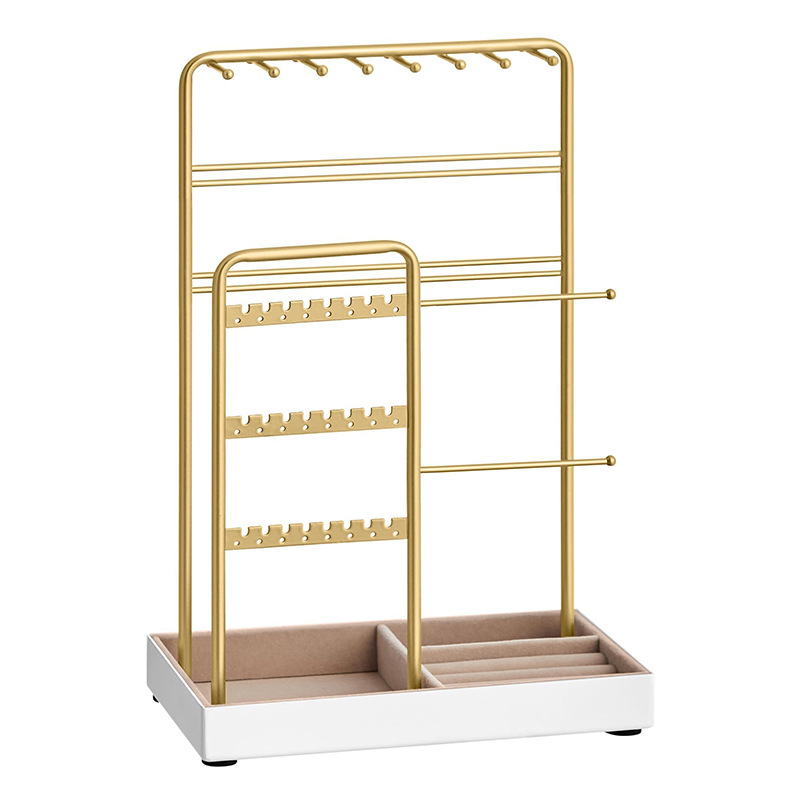
The real revolution was internal. An 1865 London patent for a "layered jewelry box" divided the interior into functional zones, and the idea spread quickly: hooks on one side for necklaces so they would not tangle, grooves on the other for rings so they would not roll, a padded tray in the middle for pearls. Old craft wisdom survived inside the new format, such as camphor lining to slow silver oxidation, and pull-out trays that turned one box into a travel case for a dinner party.
What the period left in every box made since
Machine production also standardized a design language: the curved lid popular in the 1870s and the metal edge trim of the 1890s appeared in similar forms across different factories. And the best pieces of the era already showed the balance modern buyers still look for, like the award-winning box at the 1900 Paris Expo with a machine-sewn waterproof shell and seven hand-crafted drawers inside.
When you judge a supplier's catalog today, you are in effect judging how well they run this inheritance: the layered interior is the standard, custom boxes are the descendant of the bespoke workshop, and the practical question has not changed since 1900, which is whether the interior layout fits what you actually own.
The timeline that stuck
The 19th century set the box format still on shelves.
| Year | Development | Lasting effect |
|---|---|---|
| 1851 | Steam-powered leather embossing demonstrated (London) | Machine-made boxes for ordinary homes |
| 1865 | Patent for a "layered jewelry box" | Hooks, grooves, trays become standard |
| 1890s | PVC-coated fabric (Germany) | Water/mold-resistant covers |
| 1900 | Award-winning machine-sewn, multi-drawer box (Paris) | Balance of shell and hand-finished interior |
When you judge a supplier's catalog today, you are judging how well they run this inheritance: the layered interior is the standard, custom boxes are the descendant of the bespoke workshop, and the practical question has not changed since 1900 — whether the interior layout fits what you actually own.
Frequently asked questions
When did jewelry boxes become mass-produced?
In the second half of the nineteenth century, when industrial cutting, sewing and steam-powered tanning made leather boxes cheap enough for ordinary households rather than only the wealthy.
Which 19th-century features are still standard?
Layered interiors with necklace hooks, ring grooves and padded center trays, patented in 1865, are the direct ancestors of the compartments in a modern organizer.
Why did leather replace solid wood in box making?
Machine tanning and pressing made leather faster to process and available in consistent thicknesses, and it cost a fraction of a hand-joined wooden case while surviving travel better.
← The thousand-year history of beauty driven by leather storage box
The Humanization Evolution of Modern Leather Jewelry Boxes →
Part of the jewelry storage guide: Case types and how they developed.
What this means for your order
If you are still deciding, one thing decides this for you: whether the origin story changes how you judge what you are buying today: the mechanisms that came out of that period are still the ones failing in transit. Everything else on a quote page is presentation.
Where this falls short easy to over-read; the machinery of that era did not solve the padding-versus-presentations problem, and it still has not.
What to send us the closure and hinge you are specifying, and we will tell you what we would ask for on today's tooling.
Related guides: About the author
Get a quote
Send the drawing, target material and volume. We reply within one business day with the MOQ, the sampling and bulk lead times for your piece, and the step each one belongs to.