Does Stainless Steel Jewelry Tarnish?
Short answer: stainless steel jewelry does not tarnish the way silver does, and genuine 316L does not rust in normal daily wear. What people sometimes call "tarnish" on steel is almost always a surface film of oil, soap or hard-water residue — and it wipes off. This is written from the factory floor, where we make 316L stainless steel jewelry in volume.
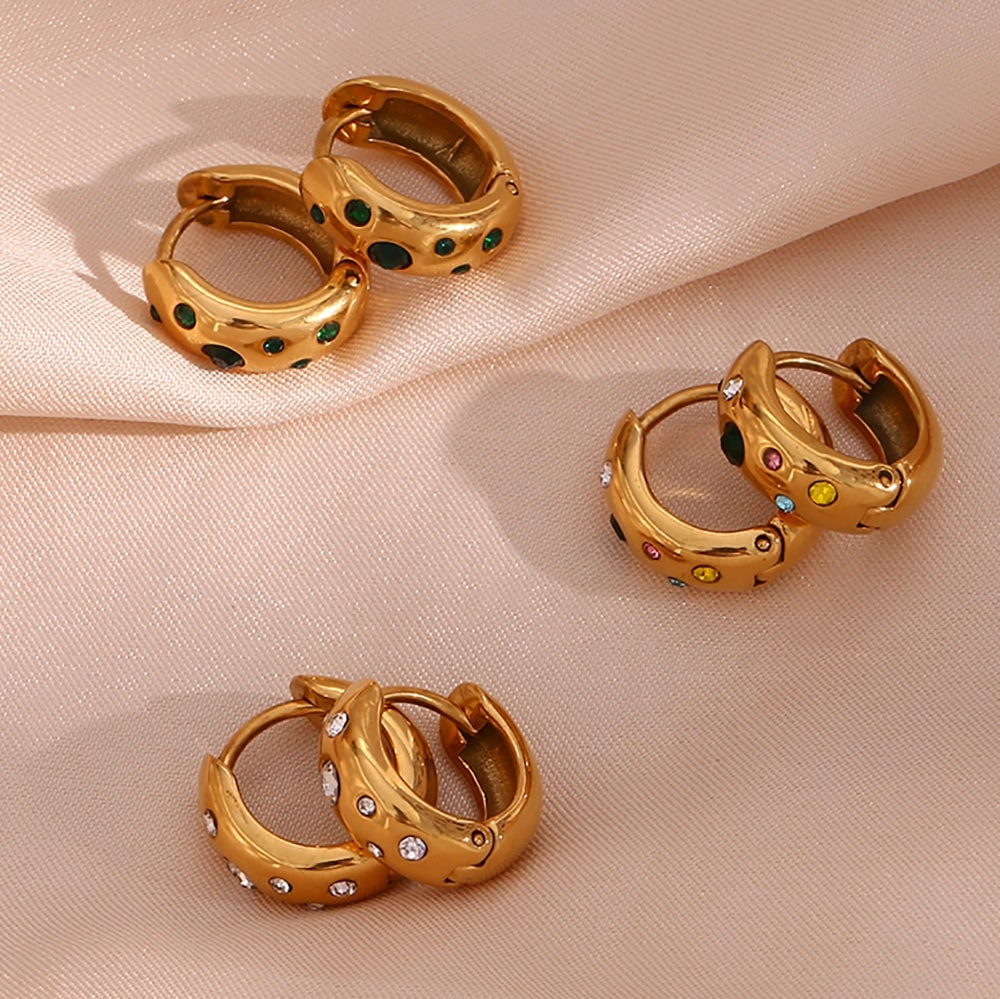
Why stainless steel resists tarnish
Stainless steel contains at least ~10.5% chromium. In air, that chromium forms an invisible, atom-thin passive layer of chromium oxide on the surface. The layer blocks oxygen and moisture from reaching the iron underneath, so the metal cannot oxidize into the dark silver-sulfide film you see on sterling silver. "Stainless" means stain-resistant , not stain-proof — but for jewelry worn in normal conditions, tarnish is essentially a non-event.
Does it rust?
High-quality 316L does not rust in daily wear. The passive layer is self-healing: if the surface is scratched, fresh chromium meets oxygen and reseals within moments. Rust can appear in three narrow edge cases:
- Low-grade or mislabeled steel. Cheap pieces sometimes use 201 or 202 stainless, which has lower chromium and higher manganese. These can pit and rust, especially near sweat or salt water. Always look for a "316L" or "304" stamp.
- Contact with free iron. If stainless touches a carbon-steel key ring or a steel brush, microscopic iron particles can transfer and rust on top of the steel. It looks like rust but usually wipes off.
- Extreme chlorine or acid. Concentrated pool chlorine or strong acids can break the passive layer faster than it reseals. Normal swimming is fine; leaving jewelry in bleach is not.
For genuine 316L worn day to day, rust is a non-issue. Our care guide covers the two-minute routine that keeps the finish bright.
"My ring looks dull" — what is actually happening
A dull or dark film on stainless is almost always contamination sitting on the surface, not corrosion of the metal:
- Skin oils, perfume, sunscreen and soap scum build a sticky layer that reads as "dull."
- Hard-water minerals leave white or grey spots if jewelry is left to dry wet.
- On PVD-colored pieces, the underlying steel is fine — what wears is the color coating at high-friction points (inside a ring band, the clasp).
All of it cleans off with warm water, a drop of mild soap and a soft cloth. See the step-by-step in our 316L jewelry care guide.
How to keep steel from spotting
- Rinse with clean water after swimming in a pool or the sea, then dry.
- Store pieces in a dry box, not a humid bathroom counter.
- Keep steel away from bleach and nail-polish remover.
- Buy verified grades — a "316L" stamp is your best insurance against low-chromium steel that really can rust.
Does stainless steel tarnish in water?
No. Water is exactly what you clean it with. Tarnish needs a sulfur or oxidation reaction the passive layer blocks.
Will it rust in the shower?
No. Showering with 316L is safe; soap scum can dull it, but that is residue, not rust.
How do I tell low-quality steel?
Look for a 316L/304 stamp, test magnetism (genuine 316L is only weakly magnetic), and watch for rust spots within weeks of wear — a strong sign of low chromium content.
For the material basics, compare 316L and 304 stainless steel and read our guide to PVD vacuum plating for colored finishes.
← How to Care for 316L Stainless Steel Jewelry: Cleaning, Storage and the Myths
Is Stainless Steel Jewelry Hypoallergenic? The Honest Answer for Sensitive Skin →
Part of the jewelry storage guide. Next: the 316L jewelry care guide.
Also answered in the FSC CRAFT FAQ: 316L against 304, tarnish, skin discolouration and care, in one list.
Part of the compliance and testing page: Corrosion, the other half of the release question.
Frequently Asked Questions
Does stainless steel jewelry tarnish the way silver does?
No. Genuine 316L does not tarnish in normal daily wear and does not rust. What people read as tarnish is usually a film from lotion, salt or polish sitting on the surface rather than a change in the metal itself.
What actually removes the film?
Warm water, a little dish soap and a soft cloth, then a dry cloth to finish. A rougher scrub takes a thin plating layer along with the film, which is how a piece that used to look fine starts to look dull.
When should I worry about rust?
If a piece is worn in salt water or a pool and never rinsed afterwards. Stainless resists corrosion; it does not ignore it. A rinse in fresh water after a swim is the whole of the maintenance.
What this means for your order
If you are still deciding, one thing decides this for you: what the piece is exposed to - salt, sweat and cosmetics in the order they matter - because all three cause dulling that no cleaning routine undoes. Everything else on a quote page is presentation.
Where this falls short a nonevent if the piece is worn occasionally and stored dry.
What to send us Tell us the wearing conditions your customers have and we will tell you which of the dulling causes apply.
Related guides: Trendy Stainless Steel Heart Pendant Necklace for Women; Twist C-shape Stainless Steel Rings – Gift for Girls; 18K Gold Plated Stainless Steel Daisy Pendant Necklace
Related guides: Validate a Stainless Steel Jewelry Niche Before Sourcing; Promise Rings in Stainless Steel: Meanings, Sizing, Sourcing; Stainless Steel Anklet with Crystal Embellishments
For bulk programs, our guide to working with a 316L stainless steel jewelry supplier covers material grade, the hypoallergenic angle and MOQ.
Get a quote
Send the drawing, target material and volume. We reply within one business day with the MOQ, the sampling and bulk lead times for your piece, and the step each one belongs to.