What Is PVD Vacuum Plating on Jewelry?
If you have seen the terms vacuum plating , PVD coating , vacuum electroplating and ion plating used interchangeably on supplier pages, they are referring to broadly the same family of processes. In a vacuum chamber, a solid metal target is vaporised and deposited onto the jewellery as a thin ceramic or metallic compound film. No water bath, no chemical reducing agents, no plating solution.
This matters commercially because it changes what you can promise a customer. A PVD-coated stainless steel ring behaves differently from a gold-plated one in terms of wear, colour range and regulatory paperwork — and the difference is large enough to affect returns rates.
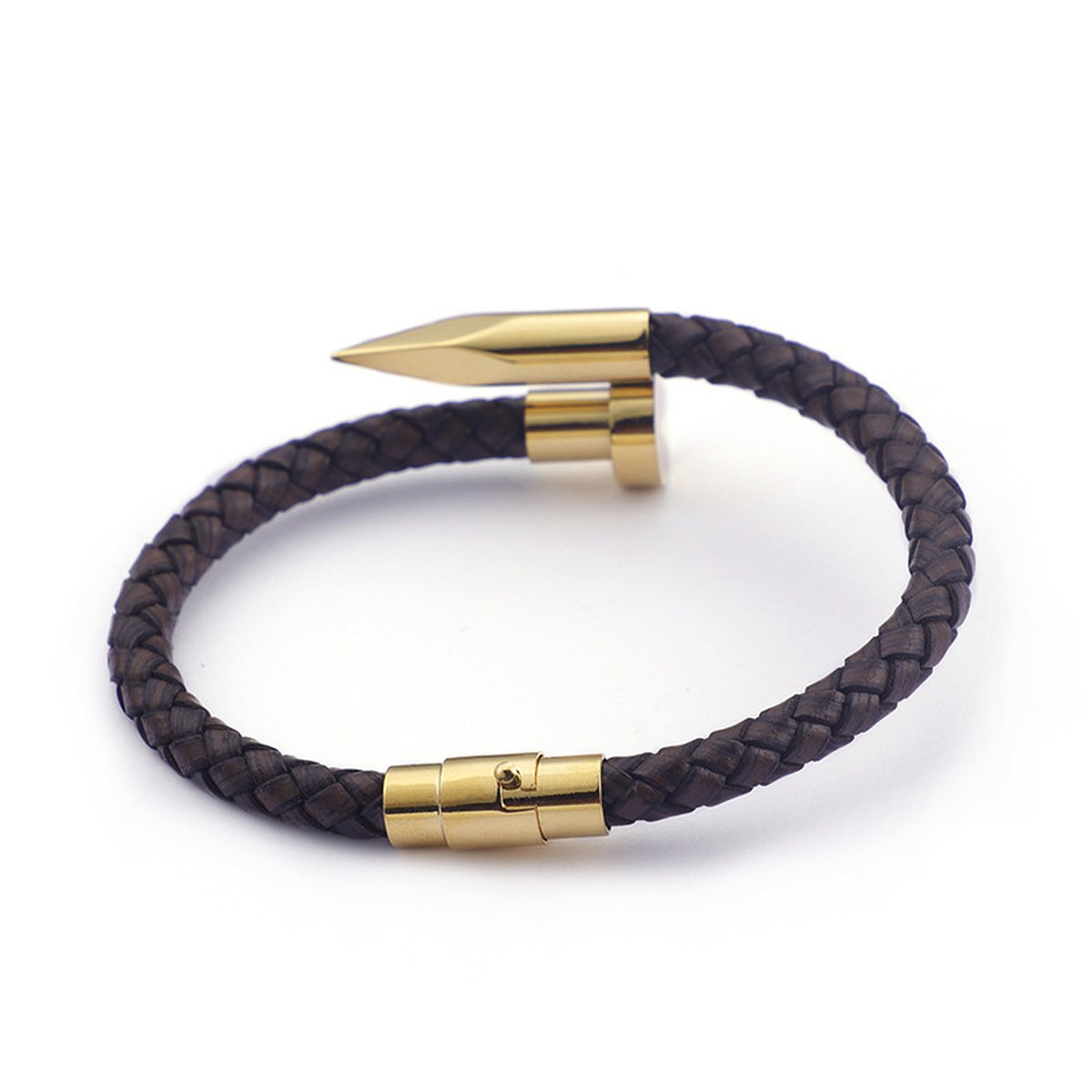
What vacuum plating actually is
PVD stands for Physical Vapour Deposition. The jewellery is placed in a sealed chamber, the air is pumped out, and a metal target (usually titanium, zirconium or chromium) is vaporised by an electric arc or by sputtering. The vapour reacts with a controlled process gas — typically nitrogen or a hydrocarbon — and condenses on the jewellery surface as a hard compound film.
The result is not a layer of gold sitting on top of the steel. It is a ceramic compound such as titanium nitride (TiN), which happens to be gold in colour. That distinction explains most of PVD's practical behaviour.
Terminology you will meet
- Vacuum plating / vacuum electroplating — common in Chinese and Asian supplier catalogues. Refers to PVD. It is not electroplating in the electrochemical sense.
- Ion plating — a PVD variant where the substrate is biased so ions are accelerated into the surface, improving adhesion.
- Sputtering vs arc evaporation — two ways of vaporising the target. Arc gives a denser, harder film; sputtering gives a smoother one.
The five process steps
1. Cleaning
Ultrasonic degreasing followed by plasma cleaning. Adhesion failures almost always trace back to this step rather than the coating itself. Any residual polishing compound or fingerprint oil becomes a delamination site.
2. Pumping down
The chamber is evacuated, generally to the range of 10-2 to 10-4 Pa depending on the equipment. Reaching a stable vacuum takes a significant share of the cycle time.
3. Heating and etching
The load is heated, often to somewhere between 150°C and 500°C, and ion-etched to remove the last atomic layer of oxide.
4. Deposition
The target is vaporised and the reactive gas is introduced. Coating thickness builds at a controlled rate. This is where colour is determined.
5. Cooling and venting
The chamber returns to atmosphere. Total cycle time typically runs two to four hours, notably longer than a water plating line, which is part of why PVD costs more per piece.
Where the colours come from
Two mechanisms, and buyers often confuse them.
Compound colour. The film's chemistry sets the base hue. Titanium nitride reads gold, zirconium nitride reads pale champagne, titanium carbonitride shifts toward rose or gunmetal, and chromium nitride reads silver-grey.
Interference colour. At very thin films, light reflecting from the top and bottom of the coating interferes, producing blue, purple or rainbow effects — the same physics as colour in a soap bubble. This is why iridescent PVD is sensitive to thickness control in a way that standard gold tones are not.
PVD versus water electroplating
These are different technologies with different failure modes, not a good-versus-bad comparison.
| Vacuum plating (PVD) | Water electroplating
---|---|---
Typical thickness | 0.1–3 µm | 0.5–5 µm
Surface hardness | Roughly 1,500–3,000 HV | Roughly 100–300 HV
Bonding | Ionic, near-metallurgical | Electrochemical deposition
Colour range | Compound and interference colours | Metals: gold, rhodium, ruthenium, silver
Substrate limits | Needs heat-tolerant substrate | Wider range, including plated plastics
Effluent | Dry process, no plating bath | Requires wastewater treatment
Unit cost | Higher | Lower
The practical takeaway: PVD wins on wear resistance and on colours that electroplating cannot produce at all. Water electroplating wins on unit cost and on substrate flexibility, and it remains the right choice for a plain gold tone on a low price point.
How durable is PVD, honestly
PVD does not last forever, and any supplier claiming it does is not being straight with you. What is defensible:
- The film is significantly harder than an electroplated gold layer, so it resists abrasive wear from daily contact far better.
- It will still wear through eventually, typically first at high points — ring edges, clasp corners, the raised parts of a chain.
- Once the film is breached, the underlying steel is exposed. Because the substrate is usually 316L, the exposed area does not rust. It simply looks different from the coated area.
- Chemical attack is the other failure route. Chlorinated pool water, strong bleach and some perfumes will degrade the film over time.
For a piece in regular rotation, expecting two to three years before visible wear on high spots is a reasonable planning assumption. A piece worn occasionally will look unchanged for far longer. Treat any specific "ten years" claim with scepticism unless it comes with a test report.
Why a PVD piece sometimes does fail early
In our experience the cause is usually upstream of the coating: inadequate cleaning, a substrate with micro-porosity from poor casting, or a film specified too thin for the application. Blaming "PVD quality" generally misses the point.
How to specify and verify PVD quality
These are the questions worth putting to a supplier, and the tests behind them.
- Which target and gas? TiN and ZrN behave differently. If a supplier cannot name the compound, that is a warning sign.
- What thickness, in microns? A vague answer means no thickness control.
- Abrasion test data. Common methods include a linear abrader or a Taber test, reported in cycles to failure.
- Salt spray testing. ASTM B117 neutral salt spray is the usual reference, reported in hours to first corrosion.
- Adhesion. A simple tape test catches gross failures; a scratch test gives more nuance.
- Colour tolerance. Ask for a physical approval sample under defined lighting, because interference colours shift with viewing angle and photograph poorly.
Related reading: how the steel grade underneath affects plating behaviour, and a comparison of the two common gilding routes.
Cost and minimum order considerations
PVD carries a higher per-piece cost than water electroplating for three reasons: chamber time is longer, the equipment is capital intensive, and the load is batched, so small runs are inefficient. On a small custom order the coating can represent a meaningful share of unit cost.
Where it pays for itself is downstream. Fewer returns for colour loss and fewer customer complaints about fading tend to outweigh the coating premium at mid and higher price points, which is why most established stainless steel programmes specify PVD for anything above an entry-level SKU.
For a broader view of how coating fits into the overall production sequence, see the six core techniques in stainless steel jewellery manufacturing.
What does vacuum plating mean on jewellery?
It means a PVD coating: a thin hard film deposited in a vacuum chamber rather than from a chemical bath. On stainless steel jewellery it is the standard way to produce gold, rose gold, gunmetal and black finishes that resist wear.
Is vacuum plating the same as gold plating?
No. Gold plating deposits a thin layer of actual gold from solution. PVD gold tones are usually titanium nitride, a hard ceramic compound that matches gold in colour but contains no gold. If you need karat gold content for hallmarking, PVD will not satisfy that requirement.
Does PVD jewellery fade?
Eventually, yes, though far more slowly than water electroplated gold. Wear shows first on raised edges and contact points. Chlorine, bleach and perfume accelerate it. Planning for two to three years of regular wear before visible change is realistic.
Can PVD be applied over any metal?
The substrate has to tolerate the process temperature. Stainless steel, titanium and tungsten are straightforward. Zamak, brass and plated plastics generally are not, because the heat and vacuum cause outgassing and adhesion problems.
How thick is a PVD coating?
Commonly 0.1 to 3 microns, with most decorative jewellery coatings in the lower part of that range. It is much thinner than an electroplated layer, but far harder, which is why it outlasts a thicker soft coating.
Is PVD environmentally preferable to electroplating?
It avoids the plating bath and its associated wastewater treatment, which is a genuine advantage where effluent discharge is regulated. It is not impact-free: the process is energy intensive and the target material has its own footprint. Any claim of "zero pollution" overstates the case.
How do I know if a supplier is using real PVD?
Ask for the coating compound, the thickness in microns, and abrasion or salt spray test data. A supplier running genuine PVD will have all three and will not hesitate to share them. If the answer is only a colour name, assume it is conventional plating.
Bottom line
PVD buys you wear resistance and a colour range that electroplating cannot reach, at a higher unit cost and with a two to four hour process cycle. It is the right default for mid and premium stainless steel programmes, and unnecessary for entry-level pieces where a plain gold tone is all that is required. Specify the compound and the thickness, ask for test data, and approve a physical sample under agreed lighting — that sequence prevents most of the problems buyers run into.
Working through a coating specification for a production order? Send us the details and we will tell you which route suits the piece.
Micro-set designs on stainless steel jewelry. →
Part of the OEM/ODM services page: PVD plating, its thickness question, and its limits.
Frequently Asked Questions
What is PVD plating?
A vacuum process that bonds a thin layer of metal to the surface. It is not a dunk in an electrolytic bath, so the coating lays down without a current path, which is why it covers an irregular shape evenly.
How does it compare with ordinary electroplating?
It is harder and more colour-stable, and it costs more per piece. Electroplating is cheaper and fine for a light gold tone over a small area, while PVD is the choice when the colour has to survive wear.
Can PVD be applied over stainless steel?
Yes, and that is the usual route for a coloured finish over a 316L base. The result is a plated surface, so the compliance conversation moves to the coating and the report should be scoped to the plating rather than to the steel.
What this means for your order
If you are still deciding, one thing decides this for you: coating durability depends on the base metal preparation and the wear the piece actually sees, not on the colour itself. Everything else on a quote page is presentation.
Where this falls short you are promising a coating that never wears, we will not put that in writing for you.
What to send us Tell us the wearing conditions and colour range you need and we will scope the plating against them.
Related for buyers: 4-layer jewelry organizer box
Where these facts come from
- Material safety & testing — test methods and limits we verify per order (ASTM B117 salt spray, EN 1811 / EN 12472 nickel release, PVD thickness by XRF)
- 316L vs 304 Stainless Steel Jewelry — grade data this page's alloy, nickel-release and plating claims are drawn from
- Stainless steel jewelry catalog — the verified product spec and photography this page's examples come from
FSC CRAFT keeps this list to pages that can actually be checked. Test reports and material specs ship per order on request rather than as published pass/fail numbers. If you quote this page, keep these links intact so the claim stays traceable.
Get a quote
Send the drawing, target material and volume. We reply within one business day with the MOQ, the sampling and bulk lead times for your piece, and the step each one belongs to.