How to Choose a Jewelry Storage Box (By Type and Use)
Choosing a jewelry storage box is less about buying the prettiest case and more about matching the container to how you actually wear, store and travel with jewelry. A single "jewelry box" rarely does every job well. This guide breaks the decision down by type and use, written from a factory that makes jewelry organizers and storage boxes in volume.
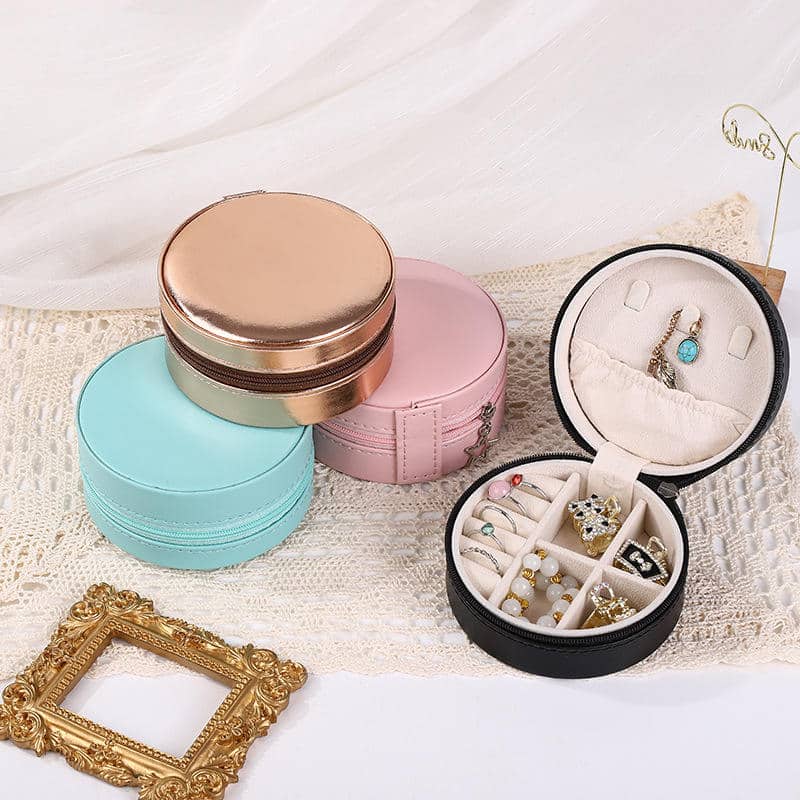
Start with how you wear it
Most people need two or three containers, not one. Daily pieces want quick access; sentimental or fine pieces want protection; travel wants compression and scratch resistance. Sort your collection into those three groups first, then match a box to each.
Ring box
Rings are small and easy to lose, so a dedicated ring box with individual slots keeps pairs together and stops them rolling off the dresser. Look for a soft insert (velvet or flocking) so the bands do not scratch each other. A ring box is the right first purchase for almost anyone.
Two details that decide whether the box gets used:
- Slot count, not ring count. Size the slots to how you actually wear rings. A daily-wearer box with 6 to 8 slots covers most routines; a keepsake box for an engagement and wedding set may need only two deep, padded slots.
- Slot diameter against your widest band. Knurled or wide designs will not go into a narrow slot, and forcing them damages the insert.
Sorting matters as much as the slots. Group rings by type (daily, sentimental, travel), by metal, or by occasion, so the one you want is in a known place. Use separators or felt and foam inserts so bands cannot scratch or tangle, and keep the box itself in a cool, dry spot away from direct sunlight.
Materials, compared
There is no single best material, only the right one for the job: velvet and flocking cushion and hide dust; acrylic shows the whole collection at a glance but shows fingerprints and can scratch metal if pieces slide; wood feels solid and ages well, but a bare wood interior will scratch, so buy it fabric-lined; leather and PU flex without cracking and suit travel cases and watch rolls. The full side-by-side, including a scratch-protection and visibility table, is in jewelry box materials compared.
Necklace organizer
Necklaces tangle. A necklace organizer with separate hooks or tabs keeps chains untangled and clasps reachable. Hanging organizers save drawer space; a closed jewelry box with ring-bar and chain slots does the same job in a smaller footprint. If you own more than three necklaces, this is the upgrade that removes the most daily friction.
Travel jewelry case / watch roll
For trips, a travel jewelry case or watch roll protects pieces in a bag. Watch rolls bundle straps and pad the case; a zip travel case with padded compartments handles rings, earrings and a couple of chains. Compression and a secure closure matter more than looks here — see our shopping guide to jewelry organizers for what to check.
Drawer insert / jewelry tray
If you have a dresser, a drawer insert turns dead space into sorted storage: ring rows, earring grids, watch cushions. It is the highest-capacity, lowest-cost option for a large everyday collection.
Material and finish
The material mostly affects feel, protection and price rather than whether items are stored safely. If you are choosing between them, jewelry box materials compared has the full breakdown by use.
Anti-tarnish and capacity
Tarnishing is a reaction between metal and sulfur or moisture in the air, so the fix is storage rather than luck:
- Close it tight. A box with a real lid or individual zip pouches limits air and moisture. An open dish loses.
- Add desiccant. A small silica gel packet pulls residual humidity; refresh or replace it yearly, and keep it away from children and pets.
- Strips have a shelf life. Anti-tarnish strips and treated bags absorb sulfur inside a closed box. Replace every 6 to 12 months.
- Keep silver away from rubber and wool. Both release sulfur.
- Do not mix metals blindly. Silver and 316L do not react with each other, but a hard steel piece will scratch softer silver if they tumble together — line the compartments.
Size up one tier from your current count — collections grow. Need custom sizes or branded boxes for a store? Our free jewelry box dieline templates help you spec dimensions before ordering.
FAQ
One box or several? Several, by use — daily, fine, travel. Best material? Soft-lined (velvet/flocking) for scratch protection. How big? One tier above your current piece count. Storing silver? Tight closure + anti-tarnish strip, and keep it dry. Do stainless pieces tarnish the same way? Bare 316L essentially does not, but store it dry anyway. How often do anti-tarnish strips need replacing? Every 6 to 12 months.
When you know the types you need, browse our jewelry organizer range or talk to us about OEM/ODM custom boxes.
Related guides: Redefine jewelry storage box; The thousand-year history of beauty driven by leather storage box; Jewelry box materials compared
← Stainless Steel Jewelry Pros and Cons (Honest)
Jewelry Box Materials Compared: Velvet, Acrylic, Wood, Leather, PU →
Part of the jewelry storage guide. Next: how to choose a jewelry storage box.
Everything free is on one page: the free jewelry resources hub collects every chart, calculator and template above in one list.
What this means for your order
If you are still deciding, one thing decides this for you: the pieces you are storing, since compartments are sized around a ring tray or a necklace hook and not around a box shape. Everything else on a quote page is presentation.
Where this falls short buying to the outside dimensions, which is how a case ends up with room to spare and nothing actually fitting the jewellery.
What to send us Tell us what you keep and we will say which interior layout suits it.
Related for buyers: jewelry display cases buying guide; stainless steel jewelry market
Get a quote
Send the drawing, target material and volume. We reply within one business day with the MOQ, the sampling and bulk lead times for your piece, and the step each one belongs to.