Private Label Jewelry Boxes: A Factory Checklist
Private label jewelry boxes are one of the fastest ways for a jewelry brand, retailer or e-commerce seller to launch a packaged product without owning a factory. You supply the brand; a manufacturer supplies the box, printed and finished under your label. If you are planning your first private label box program, this guide walks through what to prepare, the honest minimums, and how a Shenzhen, Guangdong maker near the Dongguan hardware cluster actually runs it.
Private label vs white label vs OEM
The terms get used loosely, and the confusion costs buyers money. In white label, you take a factory's existing, unbranded box and add only your logo — minimal change, fastest turnaround. In private label, the factory builds a box to your spec (material, insert layout, print, finish) but sells the same structure to other brands with their own branding — you own the look, not the tooling. In OEM, you supply the full design (a dieline or CAD) and the factory produces exactly that. Most first-time buyers want private label: more control than white label, less cost than full OEM. Be clear about which model you want before requesting a quote, because the questions a factory asks differ.
What to prepare before you request a quote
Before contacting a custom jewelry box manufacturer, gather:
- Brand artwork. Your logo as a vector file (AI, EPS or SVG) plus any Pantone or CMYK color reference. Flat JPGs lead to blurry print and a revision round you pay for.
- A dieline or clear reference. A dieline (the flat cutting template) is ideal; a clear photo with dimensions or a physical sample also works. The more precise the reference, the less back-and-forth. We publish free jewelry box dieline templates to help you start.
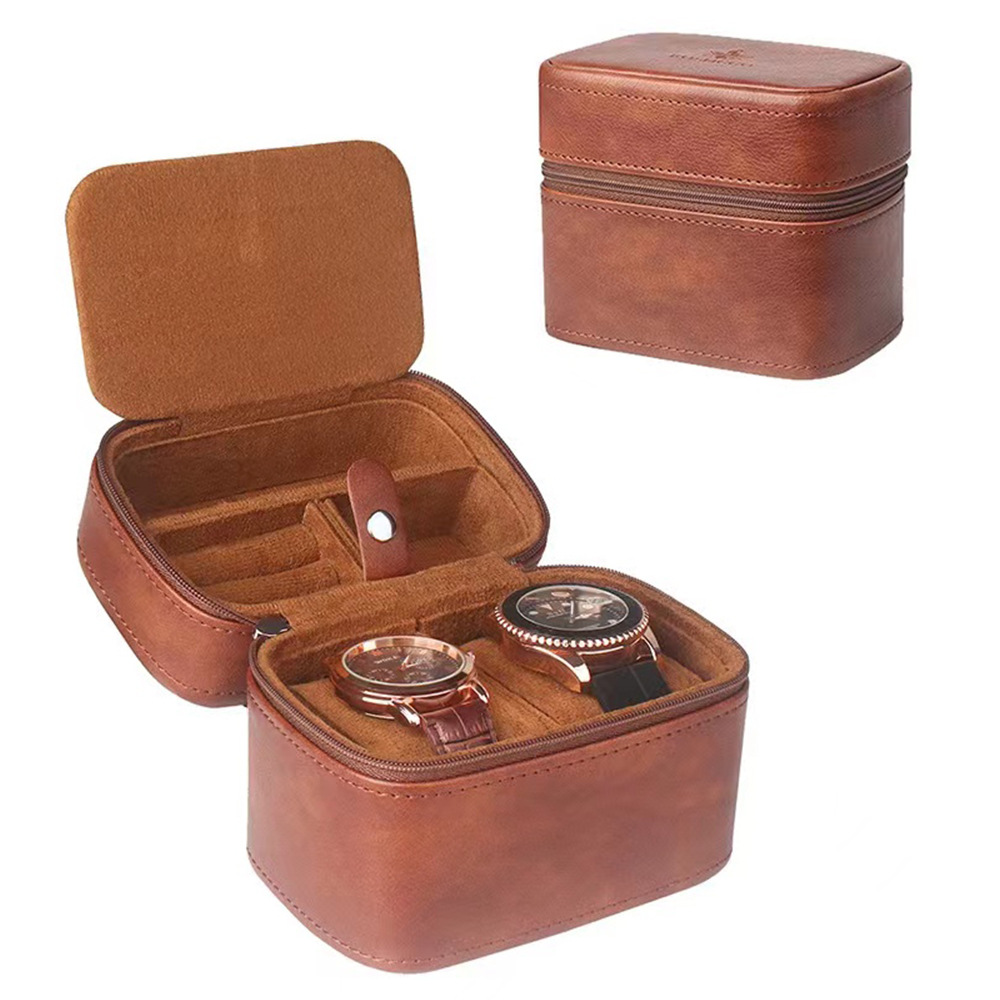
- Material and insert spec. Decide the shell (rigid paper, PU leather, wood, acrylic) and the lining (velvet flocking, foam, EVA). This is where protection and price are set.
- Compartment layout. How many ring slots, necklace tabs, watch cushions or earring rows? A simple sketch communicates more than a paragraph.
- Finishing notes. Matte or gloss lamination, foil stamping, embossing, magnetic or ribbon closure.
The honest MOQ: 500 pieces per style and color
This is the part most listings hide. Custom boxes need a printing plate, a cutting die and a setup run; below a certain volume the per-unit cost explodes and the factory loses money on setup. At FSC CRAFT the real floor is 500 pieces per style and per color. A second color or a second size is a separate 500-piece run, because each needs its own setup. We do not accept sampling below this floor — see our explainer on why custom jewelry boxes have a 500-piece MOQ. If your program is genuinely below 500, white-label stock or a smaller packaging supplier is the honest fit, not a custom run.
Material and finish choices that matter
The shell and lining decide both protection and shelf presence. How a custom box is made walks the full process, but the buyer-facing choices are few: rigid paperboard for a premium gift feel, PU leather for travel cases and watch rolls, wood for a permanent vanity piece, acrylic for display. Inside, velvet flocking protects metal best; foam and EVA hold pieces in place during shipping. Pick by use, not by looks alone.
How the private label run actually works
Once your spec is set, a typical run is: (1) artwork and dieline check, (2) a physical pre-production proof (usually one or two pieces) for you to approve print and fit, (3) bulk production after sign-off, (4) individual QC and packing. The proof step is where surprises — a color shift, a too-tight ring slot — get caught cheaply. Skipping it to save a few days is the most common way buyers end up with a container of wrong boxes.
Certifications and compliance
For boxes sold into the EU or US, the relevant marks are CE, RoHS and FCC, handled on request per market — we do not fabricate certificate numbers. RoHS matters most for any box with electronic elements (a light-up lid); for standard packaging it is usually a material-declaration exercise. Tell your manufacturer the destination market up front so the right documentation is prepared with the production, not chased after it ships.
Lead times and what affects them
A standard private label run runs roughly 25–35 days after proof approval, plus transit. Things that stretch it: a custom dye or foil not in stock, a last-minute artwork change, or a peak season. Give your manufacturer a realistic launch date and work backward; the 500-piece floor exists partly because setup eats the first week regardless of order size.
Frequently asked questions
Can I private label jewelry boxes with a small order? Below 500 pieces per style and color, a true custom private label run is not economical for either side. For smaller volumes, white-label stock boxes are the practical route.
Do I need my own dieline? Ideally yes, but a clear photo with dimensions or a physical sample works to start; we can engineer the dieline from your reference.
What file do I send for my logo? A vector file (AI, EPS or SVG) with Pantone or CMYK reference. Flat images lead to blurry print and a paid revision.
Are certifications included? CE, RoHS and FCC are prepared on request per destination market; we do not issue numbers for untested claims.
How long until I get the boxes? About 25–35 days after you approve the pre-production proof, plus shipping. Custom materials or peak season can extend it.
Ready to spec your box?
If you have artwork and a rough size, the fastest next step is to contact our team with your reference and target volume. For background on why we run custom boxes the way we do, see why brands work with FSC CRAFT.
Frequently Asked Questions
What counts as private label on a box?
Your brand on the lid, inside the lid, on the hang tag and on the packing list, made by the same factory that makes the case. A new case structure with your own tooling is what separates private label from a stock case with a print.
How much of the box do I have to design myself?
Only the printed parts. A private-label program runs on an existing case structure, so the artwork, the insert card and the barcode layout are the work, not the box itself.
What is the minimum for a private-label run?
500 pieces per style and colour, because the print plates and the packing artwork are paid once. Jewelry sits at 100 pieces per design, which is why a packaged launch is the more expensive of the two to start.
Part of the OEM/ODM services page: Printing, finishing and labelling under your own brand.
What this means for your order
If you are still deciding, one thing decides this for you: logo technique, material and quantity interact: a foil stamp on rigid board and a laser mark on leather are not interchangeable at the same volume. Everything else on a quote page is presentation.
Where this falls short not for you if your run is under 500 pieces, because setup is what the minimum exists to cover.
What to send us your logo file, material and quantity, and we will tell you which technique fits and what it costs to set up.
Get a quote
Send the drawing, target material and volume. We reply within one business day with the MOQ, the sampling and bulk lead times for your piece, and the step each one belongs to.