Seam-stitching of the leather cover for the jewelry box
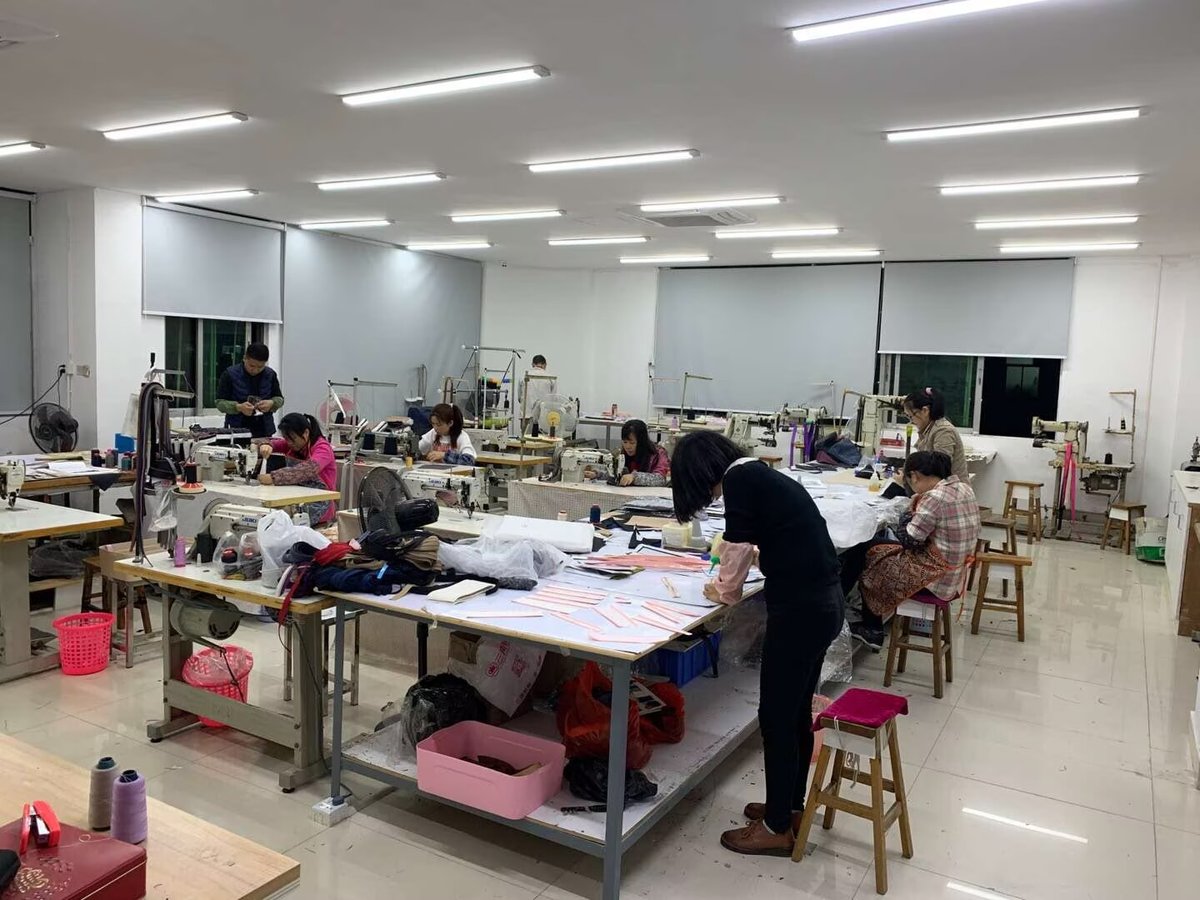
When the leather cover meets the base material, the sewing workshop is where a jewelry box starts to hold together. The work combines an adhesive layer, machine stitching and hand finishing, and each of the three has a different job: the glue bonds, the machine makes the structure strong, the hand work makes the curves look right.
The glue layer, measured like a coating spec
The adhesive is an eco-friendly yellow glue with a solid content of 28 percent or more, chosen because it meets EU environmental requirements and stays stable over years rather than months. Workers apply it with a serrated scraper whose notches are spaced at 1.5 millimeters, so the amount of glue laid down is controlled like a ruler instead of by feel. The target glue layer is between 0.08 and 0.12 millimeters: too thin and the bond is weak, too thick and the excess seeps into the leather and can cause delamination later.
In a workshop held at 25 degrees Celsius, the glued leather rests for three minutes so the solvent flashes off, then a two-kilogram pressure roller passes over it three times to work the adhesive into the fibers. Done this way, the bond between leather and substrate is close to total, and the cover does not bubble even after the lid has been opened and closed a hundred thousand times.
Machine stitching on the straight runs
A computerized sewing machine drives its needle at around 300 stitches per minute and leaves a preset 5-millimeter stitch interval on flat panels. At that density, five stitches per centimeter spread the tension of daily use instead of concentrating it at one point. Machines win on straight sections because a 0.1-millimeter deviation in the track is beyond what a hand can hold over a long seam.
Hand stitching on the curves
At the curved edge of a box cover, machine stitching stops and hand sewing takes over. The stitcher wears a horn thimble and sets each stitch into the leather at a 45-degree angle. The interval is still around 5 millimeters, but it can be adjusted stitch by stitch to follow the curvature, which no machine program does cleanly. Thread knots are buried in the interlayer so no thread ends show on the face of the leather.
Where the two techniques meet
Most covers use both: the body panel machine-sewn for strength, the cover edge hand-stitched for the line of the curve. At the junction the last stitches overlap by about 3 millimeters and are heat-pressed so the two thread paths blend. The result reads as one seam, and it holds like a machine seam while following the shape of a hand-made one.
What to check when you evaluate a cover
Run a finger along the seam: the thread path should sit in the leather, not float on it. Look at the corners, where machine and hand work meet, because that junction is where a rushed box opens up first. And ask what the adhesive spec is; a shop that controls glue thickness to a tenth of a millimeter is a shop that controls the rest of the process too.
Frequently asked questions
Why is the cover edge hand-stitched when the body is machine sewn?
Curved seams need stitch-by-stitch adjustment to follow the leather, which machine programs do not do cleanly. Flat body panels stay machine sewn for consistent tension, and the two thread paths are overlapped and heat-pressed where they meet.
What holds the leather cover onto the box?
An eco-friendly adhesive applied in a 0.08 to 0.12 millimeter layer, rolled under pressure, plus stitching over it. The glue bonds, the stitching carries the load, and either one alone would fail sooner.
What stitch density should I ask for?
Around 5 millimeters between stitches is the standard, which gives five stitches per centimeter. A tighter stitch adds cost per box and is worth specifying mainly for cases that travel and get handled hard.
Related guides: The thousand-year history of beauty driven by leather storage box; How to Care For and Maintain a Leather Watch Box
← The artistic framework of the jewelry box mold production
The meticulous work on the assembly line: The entire process of assembling jewelry boxes →
Part of the jewelry storage guide. Next: how to choose a jewelry storage box.
What this means for your order
If you are still deciding, one thing decides this for you: stitch density and thread, which decide whether the seam opens after a year of opening the box or on the first trip. Everything else on a quote page is presentation.
Where this falls short not the first thing to look at if your concern is unit cost - a tighter stitch is more expensive per box and it is worth it only if the box travels.
What to send us Tell us how the box is used - shelf or bag - and we will tell you what stitch density to specify.
Ready to source this?
If you are planning a stainless steel jewelry or organizer program, contact our team with a drawing or reference sample for a quote, or browse the full catalog.
Browse our jewelry boxes & organizers or request a quote →
Get a quote
Send the drawing, target material and volume. We reply within one business day with the MOQ, the sampling and bulk lead times for your piece, and the step each one belongs to.