Factory Direct or Trading Company: Which Suits You
If you want to buy stainless steel jewelry in China, the first decision is factory-direct versus a trading company. As someone in the cross-border jewelry supply chain, here is the practical checklist I give overseas sellers: cost, quality control, MOQ and who actually owns the risk.
If you want to buy stainless steel jewelry in China, the first decision is factory-direct versus a trading company. Both routes can produce the same 316L necklace. What changes is the cost structure, the minimum order you have to accept, how much technical control you keep, and who carries the risk when something goes wrong.
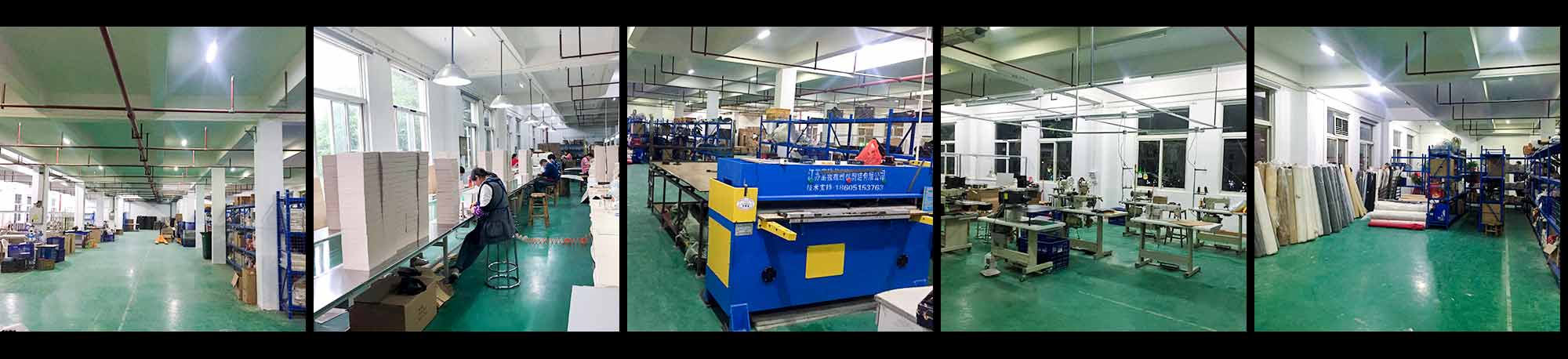
The four dimensions that decide it
- Cost. Factory-direct usually quotes lower per piece once a style repeats, because the trading margin comes out. The saving only shows up at volume; on a first order the setup charges are spread across too few pieces to matter.
- Minimum order. Factories work to a higher minimum than traders, since each new style needs tooling plus a minimum material purchase. A trader can often combine small lots from more than one factory into a single shipment. For our own line the minimum is 100 pieces per design for jewelry, and 500 per style and color for custom boxes.
- Technical control. Go direct when you care how the piece is built — the grade, the plating, the stone setting, the tolerances. A trader often has to ask the factory before it can answer you.
- Risk. Going direct puts inspection, compliance paperwork and IP protection on your desk. A trader absorbs part of that, for a fee.
Which route fits which stage
- Startup, one style, demand still unproven: start with a trader that has factory relationships. You spend less to test the market, and you avoid buying inventory you cannot shift just to clear a factory minimum.
- Growth, bestsellers alongside small batches: split it. Run the winners direct factory, keep the experiments with a trader, and balance cost against speed.
- Mature, one style you cannot afford to lose: move to direct. Lock the capacity, own the tooling, document the process.
The misreading that costs buyers money
A small factory order often carries a higher unit price than the same piece through a trader, because setup for tooling, materials and inspection does not scale down. That is arithmetic, not a problem with the factory. What direct buying buys you is control over the product and the process, not a lower price on a first order.
Neither route is universally better. Choose direct when you have a repeatable style and enough volume; choose a trader when you need many small runs or fast turns on new designs.
More on the Dongguan Chang'an stainless steel jewelry cluster:
- why global brands flock to Dongguan Chang'an
- the evolution of the Dongguan Chang'an jewelry industry
- the high-end path of Dongguan Chang'an jewelry
- finding a steel-jewelry supply chain in China
See how stainless steel jewelry is made or the stainless steel jewelry line.
Frequently Asked Questions
Is factory-direct always cheaper than a trading company?
No. Direct unit prices are usually lower at volume, but a first order can cost more per piece, because the tooling, material and inspection setup does not scale down. Direct also costs you time: someone on your side has to run the verification, the inspection and the paperwork.
What minimum order should I expect when sourcing in China?
It depends on the route and the product line. Ours runs at 100 pieces per design for stainless steel jewelry, and 500 per style and color for custom boxes, because a box needs a cutting die and a minimum material purchase before the first unit exists. Traders can usually assemble smaller mixed lots from several factories.
When does working with a trader actually make sense?
When you need several small runs at once, or fast turns on new designs, and you do not yet know which of them will sell. A trader also helps if you have no one on your team who can read a production spec. Once one style turns out to be a repeat seller, move that style to a direct relationship.
How do I check whether a "factory" is really a factory?
Ask for a live video call on the production floor and request the business license, then check that the address on the license matches what you saw in the video. Look for your own machinery on the line, not only product photos. Then order samples from two or three candidates and compare them side by side.
My order is smaller than the factory minimum. What are my options?
Either group your order with other buyers through a trader, or find a factory willing to run below its standard minimum — some will, at a higher unit price and with a smaller range of finishes. What you cannot do is expect a custom structure at a stock minimum, because the tooling has to be paid for once and only pays back at volume.
Which documents should a supplier be able to produce?
Material certificates, test reports and an accurate country-of-origin statement. For jewelry, skin-contact safety can be checked against EN 1811 and EN 12472 nickel-release, and CE, RoHS and FCC documentation can be arranged for the destination market. Ask for the scope of each document, not just the logo on it.
About the author
FSC CRAFT OEM team — stainless steel jewelry & box organizer manufacturer based in Shenzhen, near the Dongguan Chang'an cluster. See our workshop & capabilities.
Ready to source stainless steel jewelry or organizers? Request a free quote or email service@cnszfsc.com.
← The craftsmanship forged through repeated hammering in the stainless steel jewelry factory
Part of the wholesale page: What the two buying routes cost differently.
What this means for your order
If you are still deciding, one thing decides this for you: what you want the supplier to do for you, because a factory and a trader answer different questions at different prices. Everything else on a quote page is presentation.
Where this falls short assuming the factory price is the cheaper one, since a trader's figure includes a service you may not need.
What to send us Tell us what you need the supplier to handle and we will say whether the factory route suits it.
Get a quote
Send the drawing, target material and volume. We reply within one business day with the MOQ, the sampling and bulk lead times for your piece, and the step each one belongs to.