How Steel Jewelry Gets Made
Stainless steel jewelry is built in steps — we orchestrate them
FSC CRAFT is a supply-chain integrator in Shenzhen, Guangdong, near the Dongguan Chang'an cluster. We don't do every step under one roof; instead we coordinate specialized workshops for each process and keep final assembly, QC and export in our own hands. Here is how a typical 316L stainless steel piece moves through that chain.
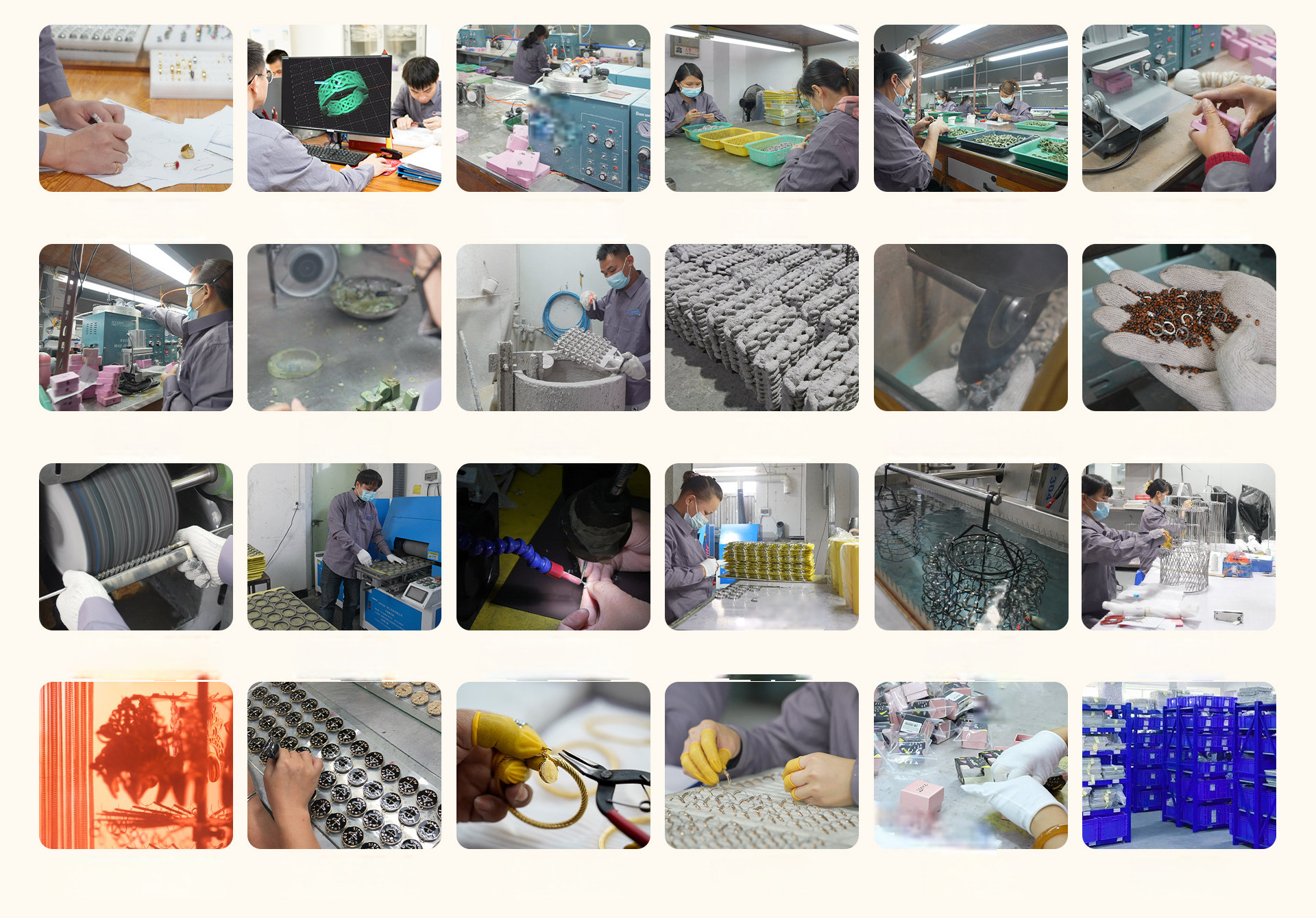 End-to-end stainless steel jewelry production process across our Shenzhen, Guangdong, near the Dongguan Chang'an cluster, Shenzhen-based workshop network.
1. Design & 3D modeling
Everything starts from your artwork or our design team's CAD models. We confirm dimensions, tolerances and mold-split lines before any metal is cut.
2. Wax mold & 3D printing
For detailed pendants and charms we build a wax model — traditionally hand-carved, increasingly 3D-printed for repeatability. The wax becomes the master for casting.
3. Lost-wax casting
The wax master is encased, burned out, and filled with molten 316L stainless steel. This step gives the base shape with minimal material waste.
4. CNC, stamping & chain making
Specialized workshops handle CNC machining for precise components, stamping for flat parts, and chain making for links and necklaces — each a distinct craft we source from the right partner.
5. Surface finishing
Parts are polished, brushed, or sandblasted to the finish your brand specifies. Good finishing is what separates a premium look from a cheap one.
Some shops also hand-hammer before the machine work. Striking the metal raises its density and surface tension, then the CNC step trims the shape and polishes it back to consistency, so you get the hand feel of a struck surface with a repeatable tolerance. Ask to see it when a piece is sold as hammered: a struck surface and a cast-textured one look similar until you hold them side by side.
6. Electroplating (gold, silver, PVD)
Color comes from plating. We route to plating specialists for gold, silver, and PVD coatings. PVD plating is especially valued for durability and color stability.
7. Assembly
Chains, clasps, stones and findings are joined. This is where FSC CRAFT takes direct control of the build quality.
8. Quality inspection
Before anything ships, our QC team checks materials, plating thickness, assembly and finish. See why base material matters in our 316L vs 304 guide.
9. Packing & export
Approved pieces are packed to your spec and exported. Need sizing help for your buyers? Our ring size calculator and bracelet & necklace size calculator are free to use and embed.
Production equipment
Each step above is backed by dedicated machinery in our partner workshops — from casting and wax injection to cutting, polishing, laser welding and CNC finishing.
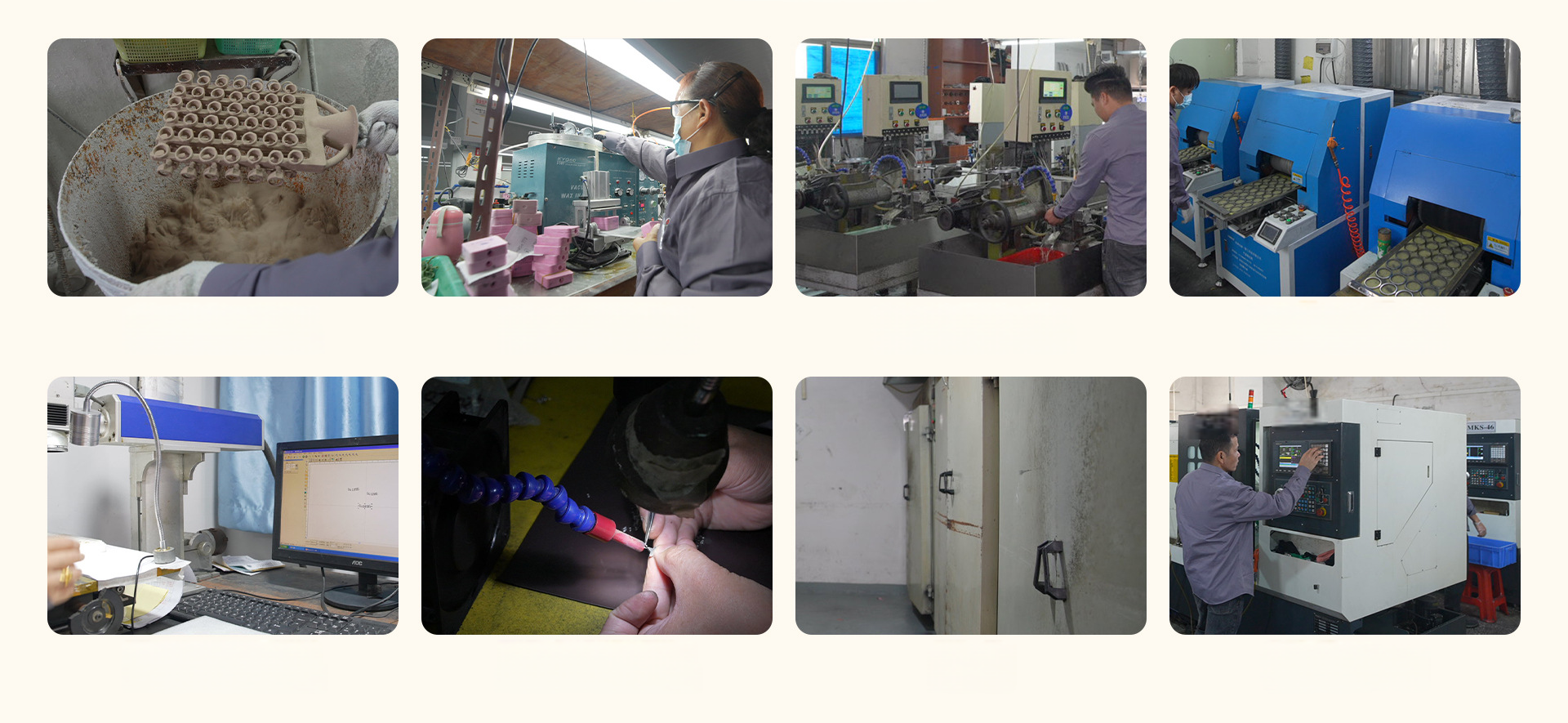 Equipment used for casting, machining, polishing, laser welding and CNC finishing.
Quality standards
We apply a consistent quality framework across the network: lab testing for materials, multi-stage polishing, controlled plating thickness, UV coating when needed, and final inspection before packing.
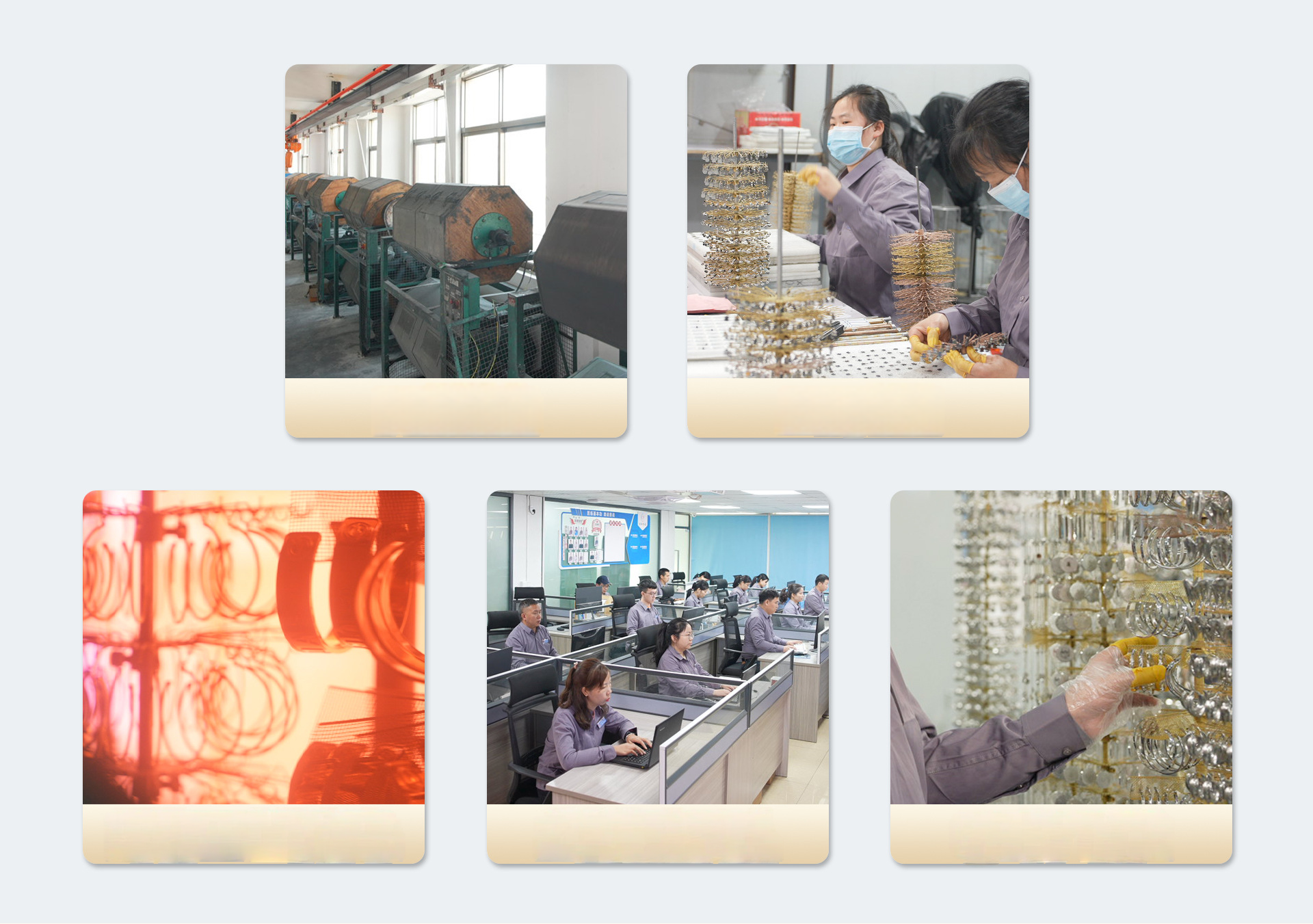 Testing, polishing, plating, UV coating and QC standards we apply before shipment.
Global reach
FSC CRAFT ships stainless steel jewelry to brands and distributors across the Americas, Europe, Asia and beyond. We meet buyers at trade shows, run video calls for every time zone, and keep export documentation clear.
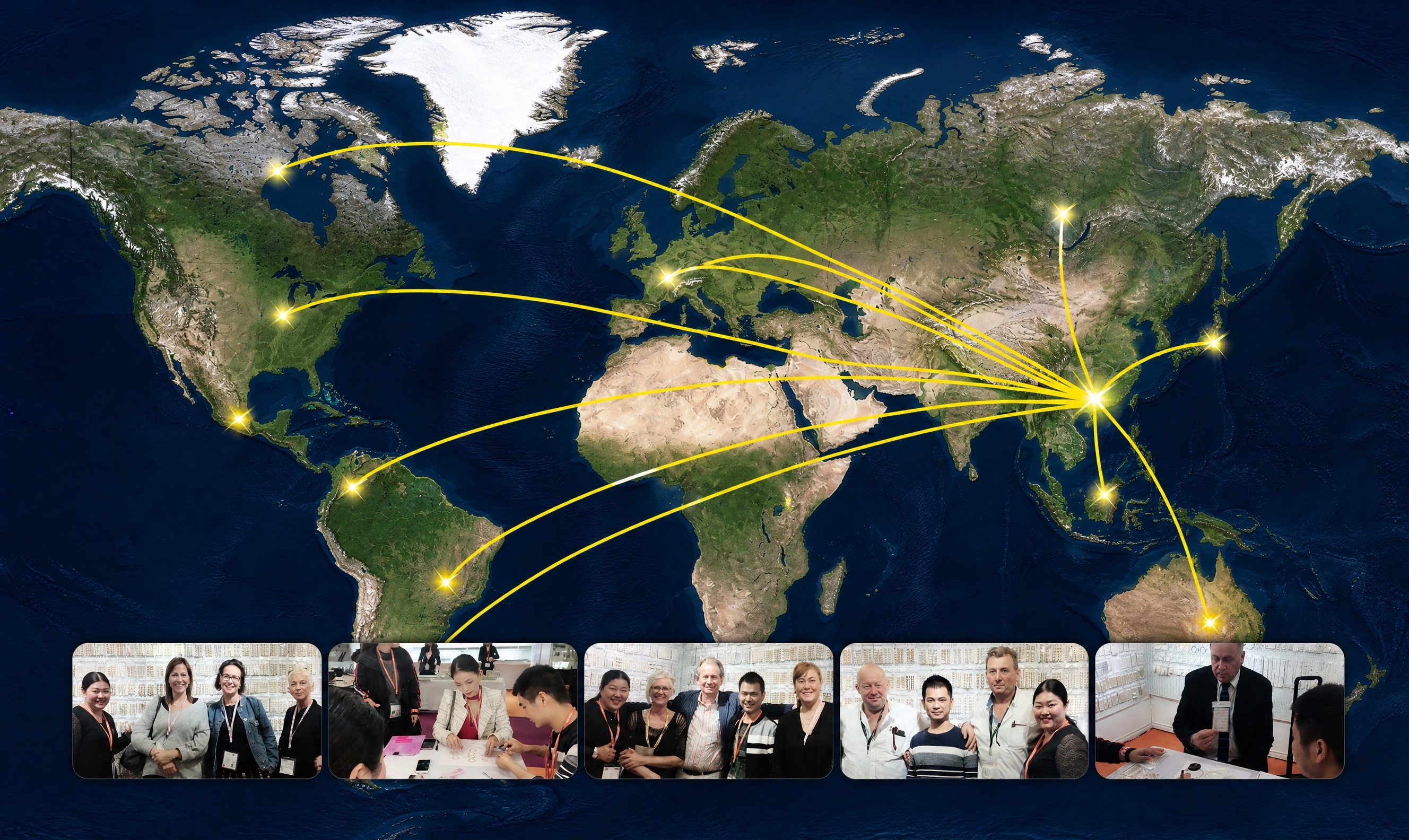 FSC CRAFT ships stainless steel jewelry to buyers across the Americas, Europe, Asia and beyond.
Compliance on request
Need CE, RoHS, or FCC documentation for your market? We arrange testing and certificates on request rather than claiming certifications that don't match your destination. Read more about how we handle 316L stainless steel and our contact team can scope the exact reports your shipment needs.
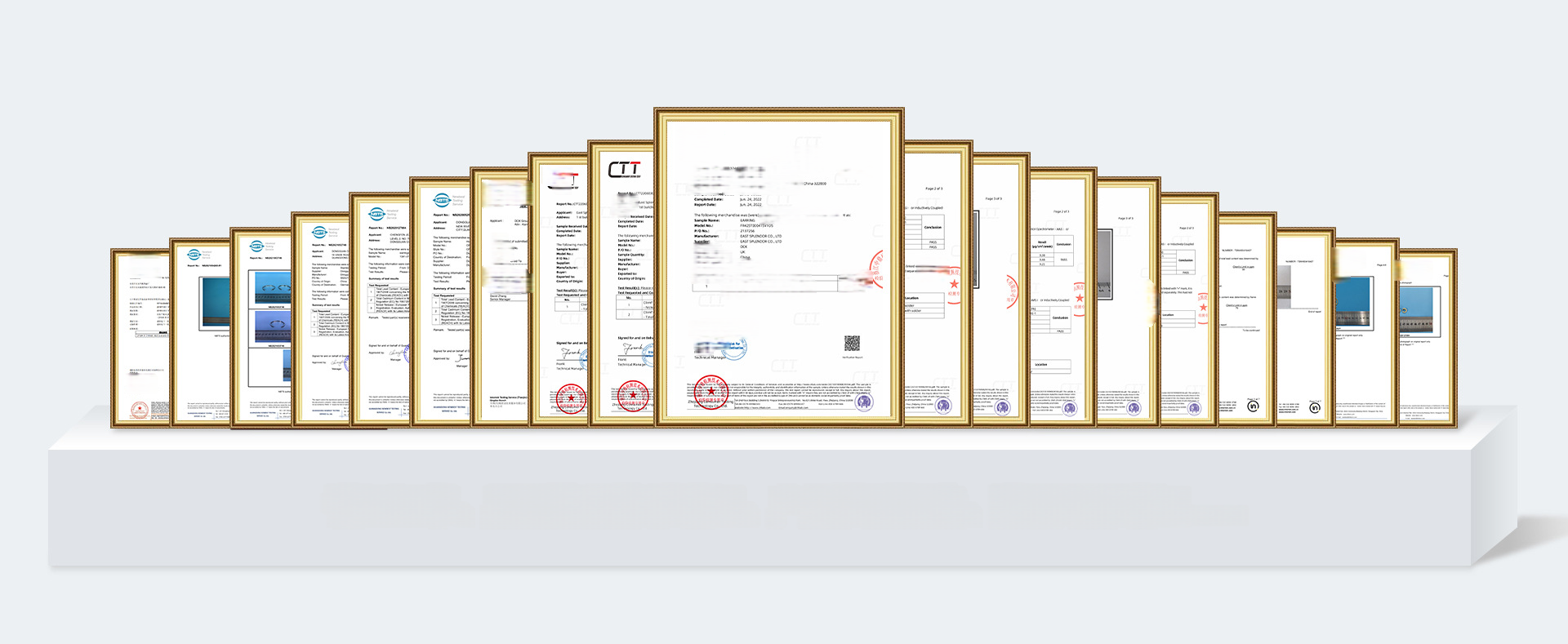 Test reports and certificates arranged per your market requirements.
Why this model helps buyers
Distributed production means the same route takes you from a low-MOQ sample to a full run, and compliance documentation is arranged per order for your destination market (CE, RoHS, and FCC). For stainless steel jewelry, our typical minimum is 100 pieces per design ; simple, lower-value items usually need a higher minimum while more complex designs can sometimes start lower. Contact us to scope your program, or browse the stainless steel jewelry catalog.
Frequently Asked Questions
Which step decides what the finished piece costs?
Two of them. Step 3 (lost-wax casting) sets the base shape and how much metal is wasted, and step 6 (plating) sets the finish cost, because gold and silver plating are priced by surface area and coating time. A flat stamped piece costs far less to produce than a cast pendant with a plated face.
Why is 316L used instead of 304?
316L carries molybdenum, which improves resistance to corrosion and to salt. For pieces worn every day — rings, bracelets, chains — that difference shows up as tarnish and pitting over months. 304 is fine for occasional earrings. The two grades are compared in our 316L vs 304 guide.
Does FSC CRAFT run every step itself?
No, and that is deliberate. We keep design, final assembly, QC and export in our own hands and coordinate specialist workshops for casting, CNC, stamping and chain making. The buyer question is therefore "which workshops", not "which factory" — ask it and you will get a straight answer.
How long does the whole chain take?
Roughly 15 days to a sample and about 45 days to bulk production, with the clock starting once the design is frozen. A design that is still moving pushes both figures out. The reasoning is in why jewelry sampling takes 15 days and why bulk production takes 45 days.
What minimum order applies?
100 pieces per design for stainless steel jewelry. Lower-value items usually need a higher minimum because the setup cost per piece rises as the piece gets cheaper; more complex designs can sometimes start lower. Boxes follow a separate rule at 500 pieces per style and colour.
What tests come with an order?
Testing is arranged per order rather than issued as a blanket certificate. Skin-contact safety can be checked against EN 1811 and EN 12472 for nickel release, and CE, RoHS and FCC documentation can be scoped for the destination market. Ask for the scope of each report, not just the logo on it.
Why is distributed production better for a buyer than one big factory?
It lets a small order move through the right specialist for each process, then come back for final assembly and inspection under one roof. The trade-off is that traceability depends on how the coordination is run, so the practical test is asking which workshops do what.
Related guides: Sandblasting is the process of shaping stainless steel jewelry in a controlled chaos to achieve an advanced matte aesthetic.
← Wholesale 316L Stainless Steel Jewelry: Hypoallergenic Bulk Supply
How Custom Jewelry Boxes Are Made (OEM/ODM Process) →
Part of the OEM/ODM services page: The route from a wax mold to a plated finish, step by step.
What this means for your order
If you are still deciding, one thing decides this for you: which process route your geometry needs, since casting, stamping and CNC do not reach the same tolerance. Everything else on a quote page is presentation.
Where this falls short expecting one quoted process to cover every shape, because the route is chosen by the part and not by the price.
What to send us The part and its tolerance, and we will say which route it can actually take.
Related guides: Trendy Stainless Steel Heart Pendant Necklace for Women; Twist C-shape Stainless Steel Rings – Gift for Girls; 18K Gold Plated Stainless Steel Daisy Pendant Necklace
Related guides: Validate a Stainless Steel Jewelry Niche Before Sourcing; Promise Rings in Stainless Steel: Meanings, Sizing, Sourcing; Stainless Steel Anklet with Crystal Embellishments
Where these facts come from
- 316L vs 304 Stainless Steel Jewelry — grade data this page's alloy, nickel-release and plating claims are drawn from
FSC CRAFT keeps this list to pages that can actually be checked. Test reports and material specs ship per order on request rather than as published pass/fail numbers. If you quote this page, keep these links intact so the claim stays traceable.
Get a quote
Send the drawing, target material and volume. We reply within one business day with the MOQ, the sampling and bulk lead times for your piece, and the step each one belongs to.